SOUTH KOREA’S TUNA FISHERIES DEMONSTRATING WHAT’S POSSIBLE

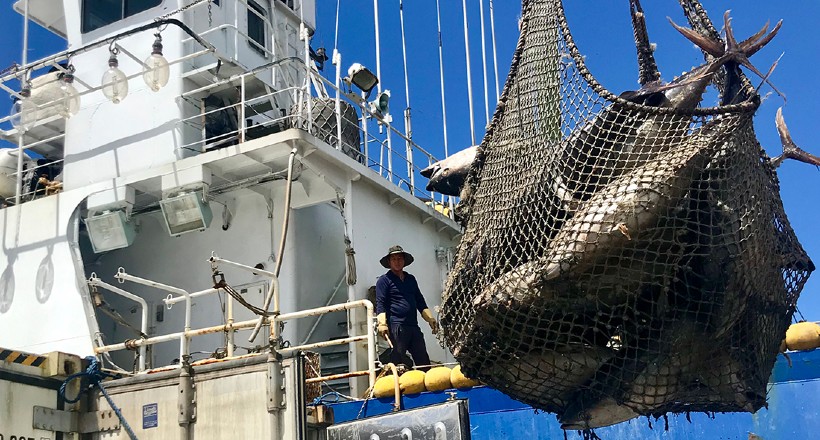
South Korea’s tuna fisheries demonstrating what’s possible. With MSC Certification in the bag, one of Korea’s largest tuna companies is just beginning its sustainability work for bigeye, yellowfin and albacore tuna fisheries.
Last year, Sajo Industries secured Marine Stewardship Council (MSC) Certification for 28 of its longline vessels catching tuna in the Eastern and Western Pacific Oceans. For Sajo, one of the largest tuna fishing companies in the world, this was a milestone. It was also just the beginning of their sustainability journey.
“MSC Certification was a significant achievement for us,” said Chi-Gon Kim, President and CEO of Sajo. “And it’s a starting point for our work, not an end destination. We are proud of what we have built and look forward to raising the bar further. Demonstrating environmental responsibility and social accountability are not constraints on our business — they are the foundation of it.”
 Sajo is the first Korean company to install electronic monitoring systems on their longline vessels, part of a government initiative to collect better fisheries data and eradicate illegal, unreported and unregulated (IUU) fishing. The data generated from EM adoption supports MSC Certification requirements and contributes to management decisions at the national and international levels.
Working with Ocean Outcomes, Sajo is taking this work a step further, leveraging the new technology to support human rights due diligence (HRDD) processes. With modern electronic monitoring systems comes better connectivity. And that connectivity is expanding to meet crew needs, such as through crew access to Wi-Fi, crew training on worker rights, establishing grievance mechanisms for crew and improving transparency around labour recruitment practices.
“This work is particularly meaningful as it is designed to benefit everyone — those working on the vessels, Sajo in meeting their environmental, social, and governance commitments, fisheries managers who need better and more reliable data, and the end consumer that wants tuna produced without adverse impacts on people or planet,” said Doohyun Park, Korea Fisheries Senior Manager for Ocean Outcomes.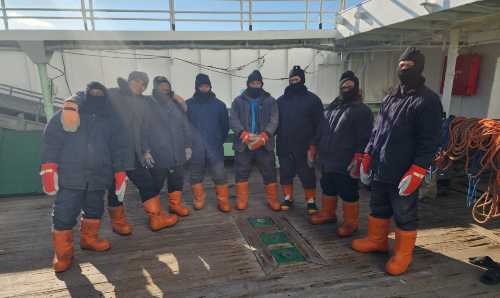
Tuna produced by Sajo is consumed in South Korea and Japan, and also exported to the United States and European Union. As seafood buyers increasingly become aware of the labour risks of high seas fishing for species like tuna, Sajo is taking a proactive approach to assessing and addressing opportunities for improved labour and crew conditions on their company owned vessels.
Sajo plans to use learnings and insight from this work to inform government programs designed to improve working conditions on distant water fishing vessels. This is creating a ripple effect across the tuna industry at large.
“As the largest tuna longline vessel operator in Korea, we have great ambitions for our sustainability work. And great responsibility. We hope to eventually expand this work to all our vessels and crew,” added Chi-Gon Kim. “Because we believe that companies that lead on sustainability today will be better positioned to earn the trust of markets and society tomorrow.”
“Sajo has really demonstrated what’s possible in terms of moving the dial on positive environmental and social outcomes in their tuna fisheries,” added Doohyun. “We are excited about our continued work together and the change we are affecting.”
Images: Sajo Industries