Fish from the Barents Sea has fewer environmental toxins than fish from the Norwegian Sea.
The researchers have analysed the content of nutrients and environmental pollutants in five fish species in the Barents Sea and the Norwegian Sea. These are the commercially important species cod, saithe, mackerel, halibut and herring.
“With the exception of mackerel, fish from the Barents Sea had less mercury and persistent organic pollutants than fish from the Norwegian Sea. This is in line with previous research at HI, which shows that the Barents Sea is less polluted than the Norwegian Sea .”
This is according to HI researcher Quang Tri Ho, who also says that the nutrient content in the fish was quite similar in the two sea areas.
“The results show the potential of the Barents Sea as a source of nutritious seafood,” says Ho.
Higher nutritional value in oily fish
The study, recently published in Environment International, looked at a total of thirteen nutrients and six groups of pollutants commonly found in fish.
The nutrients include selenium, vitamin D and marine omega-3 fatty acids such as EPA and DHA. The pollutants include mercury, dioxins and dioxin-like polychlorinated biphenyls.
“Our analyses show that fatty fish has higher nutritional value than lean fish, but also higher levels of pollutants,” says Ho.
See also: EPA: the fatty acid that is more important than we thought | Institute of Marine Research
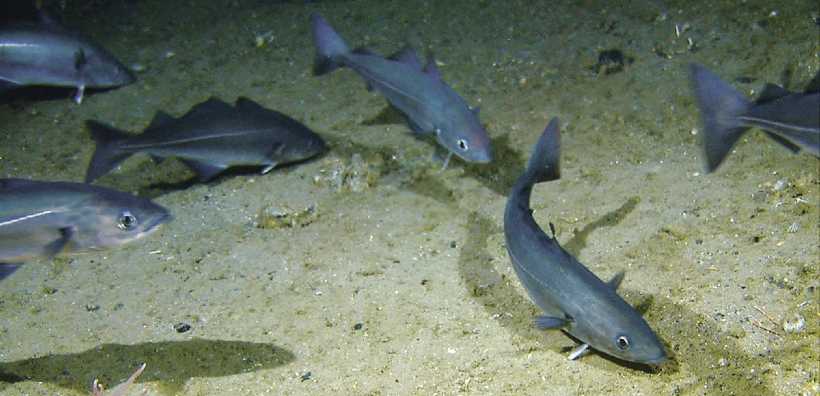
There is a lower risk of environmental toxins in saithe from the Barents Sea than in similar species from the Norwegian Sea. Photographer: Mareano / HI
Applied AI to huge datasets
The study is based on a total of 1,620 samples of fish, collected on cruises in the Barents Sea and the Norwegian Sea from 2019 to 2023.
All 1,620 samples were analysed for a total of 19 different substances/substance groups.
Ho and his colleagues tackled this extensive material using what is called “supervised machine learning.”
“This is a type of model where an algorithm is trained on known data to describe how both nutrients and environmental toxins in the fish vary and are interconnected and form patterns. These patterns are then used in the model to predict new values for a benefit/risk assessment of fish intake,” explains Ho.
Works as a “risk/benefit calculator”
Since the data base is so large, the model has good control over how nutrients and pollutants also vary within each of the five fish species.
This allows the model to accurately estimate the probability that you are below the recommended maximum intake of an unwanted substance if you eat a specific amount of a specific fish from, for example, the Norwegian Sea.
Thumbs up for 190 grams of mackerel per week
He highlights this very real example from the study:
There is only a 5% chance that a weekly consumption of 190 grams of mackerel or 130 grams of herring from the Norwegian Sea will take you above the recommended limit for certain pollutants. At the same time, both of these fish species are excellent sources of marine fatty acids and important micronutrients such as selenium and vitamin D.
“Therefore, it may well be that the beneficial effect of these nutrients outweighs the limited risk of ingesting pollutants above the recommended limit,” he says.
Weighing the pros and cons
With that, Ho points to one of the strengths of the benefit/risk assessment:
“The model takes into account both the disadvantages and advantages of eating fish of the different species from the Barents Sea and the Norwegian Sea, respectively. It can balance the nutritional value of, for example, a certain amount of mackerel against the risk that the same amount of fish exceeds recommended values for undesirable substances.”
Main image: For mackerel, the researchers did not find any significant difference in environmental toxins between the Norwegian Sea and the Barents Sea. Photo: Erling Svensen / HI