FISHING FOR LITTER MILESTONE AT LERWICK

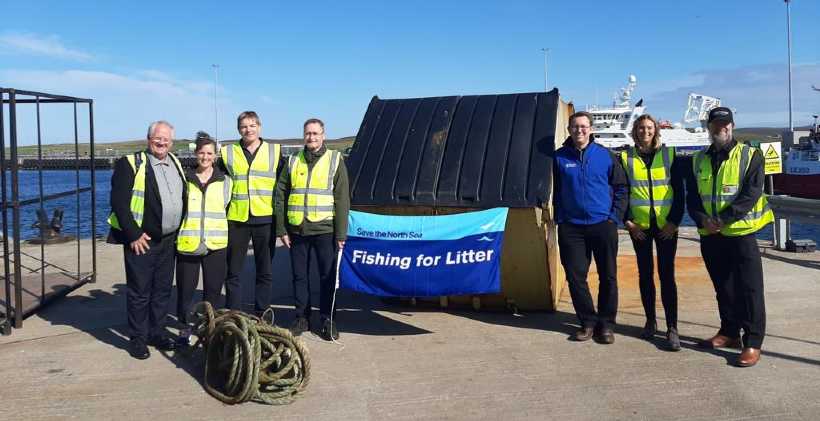
Fishing for Litter milestone at Lerwick. Lerwick Harbour was the location for a celebration marking a milestone for KIMO UK’s Fishing for Litter projects in Scotland which have removed over 2,000 tonnes of plastic pollution and marine litter from UK seas to date.
Shetland boats have removed 58 tonnes of litter in that time, with Lerwick one of the island ports used for disposal. Of the 300 vessels in Scotland and 450-plus UK-wide participating in the expanding scheme, 22 are Shetland-based.
The Fishing for Litter project is facilitated by KIMO which has its headquarters in Shetland, working for healthy seas, clean beaches and thriving coastal communities by providing large bags for removal of marine litter picked up alongside catches. The project covers the costs of litter collection and disposal.
Port Authority Chief Executive, Captain Calum Grains, said:
“We are pleased to continue our support for KIMO’s successful project as part of our ongoing commitment to protect the environment in everything we do. The industry is to be congratulated for its increasing efforts.”
The event was attended by representatives of the Council, KIMO, Shetland Fishermen’s Association and the Port.
This unique and award-winning project works with fishermen and the fishing industry to reduce the amount of plastic pollution and marine litter in the sea and on our beaches.
Following a successful test project in the Netherlands, KIMO created the Fishing for Litter project in 2004. Our members now operate the scheme in the United Kingdom, the Netherlands, and the Faroe Islands.
Since being endorsed as a model project by the Regional Seas Convention for the Northeast Atlantic (OSPAR), Fishing for Litter has been launched by other organisations in Belgium, Germany, Ireland, Italy and beyond.
The idea is simple but effective. The scheme provides large, hard-wearing bags to boats, which volunteer to participate in the scheme. Fishermen continue to work as usual, but they bring any waste caught alongside the catch back to port. The project covers the costs of collection and disposal and demonstrates the fishing industry’s commitment to a healthy environment.