JODIE KUNTZSCH, BLUE ECONOMY AMBASSADOR

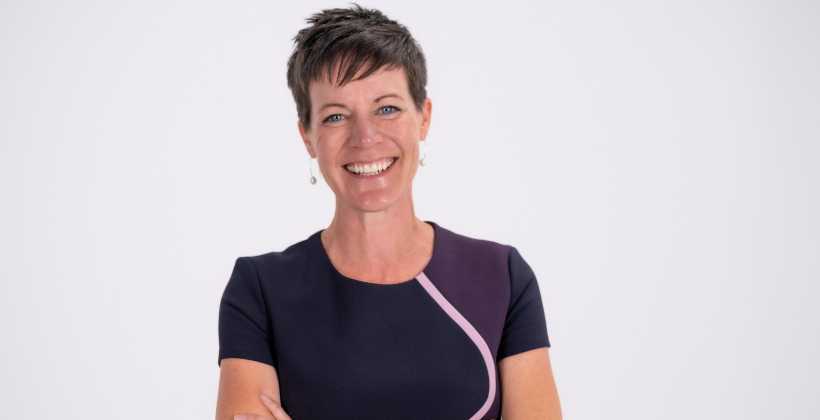
Jodie Kuntzsch, Blue Economy Ambassador. Fish Focus celebrates women in seafood in our latest publication.
When I landed in New Zealand more than twenty years ago, I thought I was embarking on a three‑month backpacking adventure, not starting a career. I had grown up in the cornfields of America, about as far from an ocean as you could get. The sea existed mostly in postcards and National Geographic. Our entire seafood range was tuna in a can and fish sticks from the school cafeteria.
I took my first aquaculture role on a whim, thinking it would pay the bills before I moved on to the next country. Instead, it opened a door I didn’t know I was looking for. Somewhere between clambering around marine farms in rough weather, stepping onto fishing vessels at dawn, touring seafood factories on remote islands, and sitting in fishy boardrooms across four continents, I became captivated. The environment, the structures and, most of all, the people who created, led and shaped this industry pulled me in.
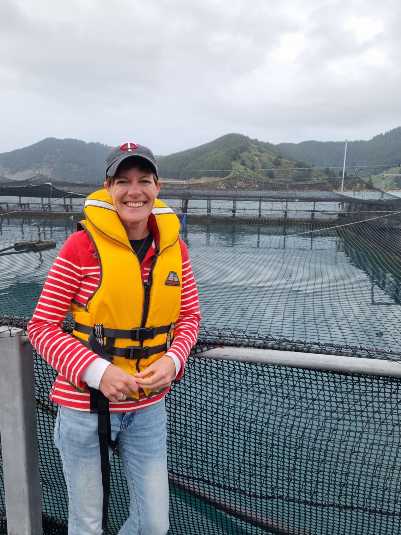 That curiosity has been stubborn for decades now; defining a diverse, exciting career across the global seafood industry. It carried me into some of the most stunning corners of the world and into the company of some of the most inspiring, intriguing, hardworking and passionate humans I’ve ever met. My roles followed that curiosity: one year I was managing aquaculture permits in New Zealand; another, auditing tuna supply chains in southern Thailand; later, developing responsible labour standards for fishing vessels in Brussels or helping launch blue economy initiatives in the Pacific. Each new challenge felt like another chapter in a global seafood story.
Underneath all of it sat my early training in research and analysis. I was fascinated by the invisible interfaces: where sustainable seafood practices meet economic development, where transparency alters market power, where today’s decisions determine whether marine resources will still be there for future generations. That analytical grounding shaped the kinds of questions I asked in every meeting, every site visit and every new initiative.
It also created opportunities I never would have predicted. I found myself sitting on both sides of the regulatory table in New Zealand: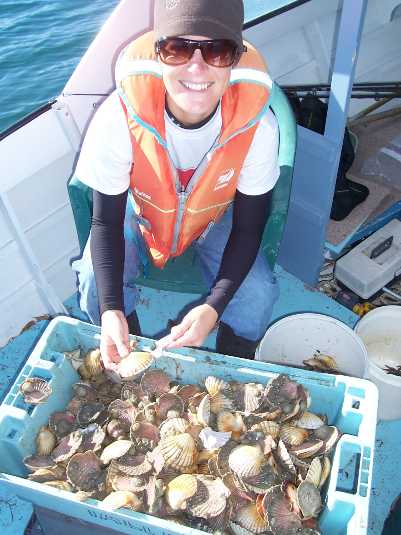 one phase advocating for industry in Select Committees or High Court settings, the next working within government on operational and strategic priorities for the sector. Later, as a consultant and programme manager, I discovered a niche that fit me perfectly: focusing on the “non‑product” attributes that sit behind great‑tasting seafood. Sustainability, traceability, social accountability, climate resilience – the things you can’t see on a plate but that define whether that plate should exist at all. I worked with clients ranging from independent fishers in remote island communities to global corporations, helping them lift performance and transparency along complex supply chains.
About five years ago, another turning point arrived. The world began to see the ocean as key to an equitable and sustainable planet. Policy, research and financing began to open to our industry is new ways. And I wanted to use everything I’d learned – including my fair share of missteps and failures – to support and champion ocean businesses and leaders of the future. That’s when I set up Aleotion. Through this company, I now collaborate with founders, researchers and changemakers across the global blue economy, helping them take ambitious concepts and turn them into real‑world products through tailored executive and operational support.
Being a woman in this industry has been both energising and confronting. In my early days, I was a young, foreign, blonde woman who knew nothing about fishing, walking into rooms and onto vessels where I stood out for all the wrong reasons. I learned quickly what it felt like to be underestimated, or to be the only woman at the table. I’ve seen sexism, exploitation and environmental neglect up close. Along the way, I had to learn to back myself, to pick my battles carefully, and to find allies in unexpected places.
At the same time, the sea introduced me to formidable leaders – both male and female – who invested in me, challenged me and opened doors. I was welcomed by crews and factory teams who cared far more about work ethic and integrity than about gender or nationality. Those relationships anchored me when the politics and power dynamics felt overwhelming.
Over the span of my career, I’ve watched the landscape for women in seafood and marine industries change in very real ways, especially in leadership. Today, there are more women heading research teams, chairing boards, managing fleets, running start‑ups and steering finance across the blue economy. International networks of women in fisheries and aquaculture – along with the connective tissue of social media – have made our contributions more visible and given us spaces to share experiences honestly, to recognise ourselves in each other’s stories.
If there is a single thread running through all of this, it is the ocean itself. The ocean connects us all, regardless of where we come from or what language we speak. The more we collaborate globally, the faster we can tackle the environmental and social challenges that threaten that connection. I am a believer that many of the solutions we need are already in the ocean – in its ecosystems, in the communities that depend on it, and in the ideas of the next generation.
My hope now is simple: that as we increase the visibility, understanding and accessibility of the blue economy – particularly for women and young people – more of them will see a place for themselves in this story, and will help write the chapters that come next.
We will be posting each individual article on our website over the coming weeks, but you can read the complete issue in our publications section here.
If you are a women working in the seafood/marine industry and you would like to be part of our next issue of Women in Seafood, or if you know of someone who you think should be, please contact me at mary@fishfocus.co.uk
Images: Jodie Kuntzsch