NEW REPORT FOR DELIVERING ON MARINE 30×30 COMMITMENTS

Calls for urgent investment in the people, systems, and partnerships needed to make marine conservation work in practice
The global race to protect 30% of the ocean by 2030 is accelerating, but a major new report released during the 11th Our Ocean Conference warns that the world risks falling short unless governments and funders rapidly invest in the capacity needed to turn commitments into reality.
The Smithsonian Tropical Research Institute report, Closing the Implementation Gap: Capacity Development for Effective Marine 30×30, provides a unique, comprehensive global assessment of the human, institutional, financial, and technological systems required to effectively implement marine protected areas (MPAs) and other area-based conservation measures that deliver enduring outcomes.
Its central finding is stark: while countries are increasingly announcing new MPAs, many still lack the workforce, governance systems, long-term funding, and local coordination needed to make those protections effective.
“It is insufficient for marine 30×30 to just be a designation challenge,” said Dr. Vanessa Constant, Associate Director for the Arsht Resilience Initiative, Smithsonian Tropical Research Institute. “It has to become an implementation challenge, backed by complementary investment in people, institutions, and long-term stewardship so that protected areas become more than lines on a map.”
In December 2022, nations committed to protecting 30% of the world’s oceans by 2030 under the Kunming-Montreal Global Biodiversity Framework, and marine protection has since expanded. According to the World Database on Protected Areas, designated marine protected areas (MPAs) cover 9.8% of the global ocean as of April 2026, up from 8.4% in 2024.
Yet progress on paper has not always translated into practice: at least half of existing MPAs remain unimplemented or operationally ineffective. Furthermore, a full 20% of ocean area still needs to be protected to meet the 30×30 spatial target, but protection alone is not enough; those areas must also be effectively managed.
The result is a widening “implementation gap” between political ambition and operational delivery.
Developed through stakeholder engagement with governments, scientists, Indigenous Peoples, local communities, NGOs, and financial actors across Southeast Asia, Latin America and the Caribbean, and the Western Indian Ocean, the report identifies two foundational requirements for success: regional contextualisation and effective coordination. Marine conservation cannot rely on one-size-fits-all approaches; each region requires locally grounded governance and long-term partnerships, underpinned by cross-sector collaboration and peer-to-peer learning.
The report also identifies six further areas requiring urgent investment: governance and policy continuity; long-term and locally accessible funding; inclusive stakeholder engagement; data and technology accessibility; socio-ecological integration; and public communication and storytelling.
One of its strongest warnings concerns the growing mismatch between rapidly advancing marine technologies and the operational realities facing communities and governments on the ground. While satellite monitoring and AI-driven analytics are expanding fast, many coastal regions still lack basic technical training, digital literacy, or access to actionable data systems.
The report also calls for conservation narratives to evolve, framing MPAs not as restrictions, but as a shared economic, cultural, and environmental value proposition tied to livelihoods, food security, and long-term prosperity.
“This is ultimately a systems challenge,” said Rocky Sanchez Tirona, Managing Director, Regional Programs, Rare. “Effectively protecting 30% of the ocean will depend not only on political will, but on sustained investment in the people, institutions, relationships, and regional and local leadership needed to make conservation endure.”
Success will hinge not just on the percentage of ocean that is protected, but on whether those protections are real, enforced, and effective in sustaining marine biodiversity.
The findings are released at the Our Ocean Conference in Mombasa, the first held on African soil, where governments, scientists, civil society, and investors are gathering to accelerate practical ocean action. Across multiple regions, local organisations, Indigenous leaders, and innovative funding partnerships are already demonstrating what successful capacity development and sharing for effective marine conservation looks like. The challenge now is scaling those efforts fast enough to match the pace of global ambition.
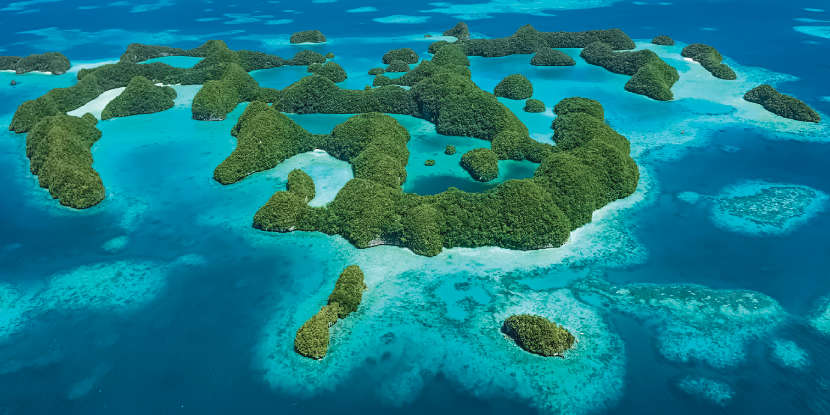
Image: @Samuel – Adobe Stock