STUDY HIGHLIGHTS CRITICAL IMPORTANCE OF UNITING COMMUNITIES AND CONSERVATION

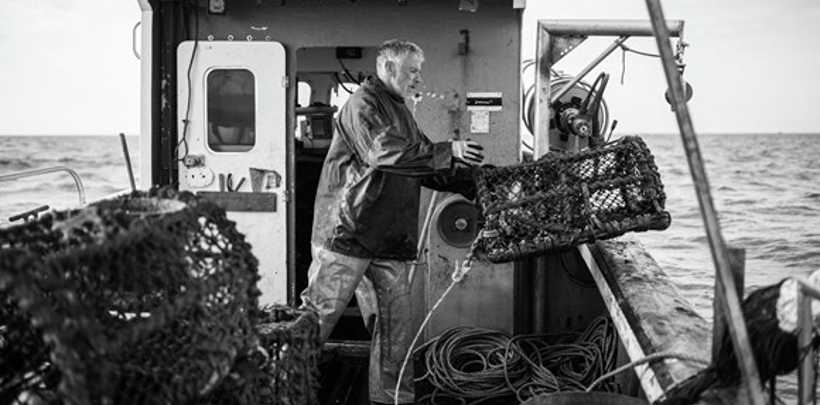
Study highlights critical importance of uniting communities and conservation to effectively implement environmental practices. The introduction and implementation of marine conservation measures can only be achieved through mutual partnerships between scientists, fishing communities and policy makers, new research has suggested.
The study draws together the novel environmental discoveries on seabed recovery gathered during 15 years of annual monitoring surveys in the Lyme Bay Marine Protected Area (MPA), following its protection from bottom towed fishing gear in 2008.
It also weaves together the wider story of efforts to protect the area, shining a fresh light on some of the people who have provided the foundation for the project successes.
In doing so, the study’s authors aimed to show how people and nature are intricately linked when it comes to understanding and managing coastal ecosystems.
This, they add, has never been of more importance as society nears the middle of a decade that is critical for the future of our ocean and the communities that rely on it.
Published in the ICES Journal of Marine Science, the study was led by researchers from the University of Plymouth and the Blue Marine Foundation, in collaboration with local communities in Lyme Bay.
Chloe Renn, a PhD student at the University of Plymouth and the new study’s lead author, said:
“Lyme Bay is a brilliant example of what can be achieved through a local community committed to defending their local environment. The movement to protect Lyme Bay’s ‘coral garden’ began with local divers and conservationists who banded together after witnessing the destruction of the seabed first-hand. From there the project has snowballed into a huge collaborative effort between NGOs, fishers, scientists and regulators. This new study goes some way to showing how they are all reaping the social and environmental benefits.”
Dr Emma Sheehan, Associate Professor of Marine Ecology, leads the ongoing monitoring in Lyme Bay as well as other initiatives aimed at better understanding the marine environment. She added:
“It’s not often we come across positive environmental stories, but the Lyme Bay MPA is definitely one of them. Witnessing the effort that goes into such a project has been really inspiring from the tireless work involved in managing and maintaining a huge ecological dataset, to the skill and local knowledge required by local fishers to guide our annual field surveys. It has been a real privilege to be involved, and is a great example of the collaboration needed to achieve real and positive change for our environment and the communities that rely on them.”
The Lyme Bay MPA was first designated in 2008, with a statutory instrument implemented to protect around 206 sq km of the seabed from bottom towed fishing gear.
Ongoing research funded by Natural England, DEFRA, Blue Marine Foundation, the European Commission, fishing organisations and local charities has shown that the whole-site management of MPAs can lead to a 95% increase in reef species, and enhance the abundance of fishes – both in terms of overall numbers and diversity – by almost 400%.
It can also boost livelihoods and conservation practices among small-scale fishermen, while also making the seabed more resilient to extreme storms.
As well as highlighting these findings, the new study sketches out a path from the research to changes in ambitious marine policy.
This has led to the approaches applied in Lyme Bay being referenced in UK Government policies – featuring in the 25-Year Environment Plan and informing the Benyon Review into Highly Protected Marine Areas.
Charles Clover, Blue Marine Foundation co-founder and senior advisor, said:
“The Lyme Bay Reserve, at its best, brought significantly greater agreement between conservationists and fishermen than exists elsewhere and put the fishermen in the driving seat in deciding conservation methods. They are the experts on what works with the grain of fishing. The goodwill involved, unusual between fishermen and conservationists, brought about a significant recovery that would probably not have happened otherwise. There are many things still to tackle but Lyme Bay is an example of getting things right, most of the time, provided that a protected area which encompasses fishing is fished in a small-scale and sustainable way.”
Sam Fanshawe, Senior UK Projects Manager at the Blue Marine Foundation and one of the new study’s co-authors, said:
“By harnessing the knowledge and experience of local community stakeholders including fishermen, regulators and conservation groups, combined with long-term monitoring by scientists, the Lyme Bay Reserve has proven the success of adopting a “whole site” approach to protection of a marine ecosystem. Used as a best practice model around the UK and further afield to support sustainable inshore fisheries that are compatible with marine conservation and recovery, the Reserve will continue to play a leading role in influencing more effective management of inshore MPAs and proving the case for banning bottom towed gear within MPAs.”