WHALE FAECES PLAY IMPORTANT ECOSYSTEM ROLE


Whale faeces contain large quantities of nutrients that are important to the ocean ecosystem, according to a new study.
In summer, 15,000 minke whales come to Svalbard to feed, and each one of them produces around 40 kilos of faeces per day. That makes 600 tonnes of whale poo in total.
It may sound disgusting, but for the ecosystem it is worth its weight in gold.
Important phytoplankton blooms
In recent years, various marine scientists have started wondering whether whale faeces could increase primary production in the ocean. In other words, whale poo might be significant to the important phytoplankton blooms – which are vital to the whole food chain and everything that lives in the ocean.
Their idea is simply that the faeces fertilize the ocean in the same way that cattle and sheep fertilize the land.
Unlike fish and zooplankton faeces, which sink to the sea bottom, whale faeces float on the surface. Precisely where phytoplankton blooms in the spring and summer.
“The problem has been that no-one has really known how much nutrients the whales excrete, and how much that contributes to phytoplankton production”, says marine scientist Carla Freitas.
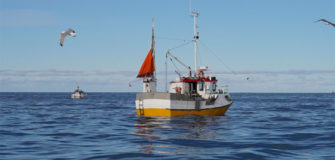
In the past, scientists have collected samples of faeces from the water, where nutrients were already dissolving. But this time the researchers took them directly from the faeces of minke whales that had been caught by commercial whalers.
Phosphorus and nitrogen were most important
After analysing the samples, the scientists found that the most important nutrients in the faeces were phosphorus and nitrogen.
Then they calculated the quantity of nutrients excreted each day by the 15,000 minke whales in the Svalbard area in summer.
Answer: 10 tonnes of phosphorus and 7 tonnes of nitrogen each day.
“Based on a rough estimate, the minke whale poo contributes around 0.2 to 4 percent of the daily phytoplankton production in the area. That may not sound like much, but it is actually quite a significant contribution”, says Freitas.
These findings were recently published in the journal Progress in Oceanography.