SKANSINN, THE OLD FORT OF VESTMANNAEYJAR

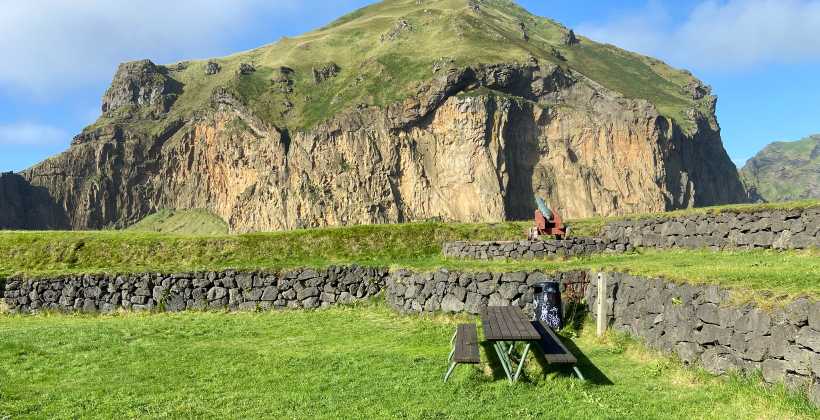
Skansinn, the old fort of Vestmannaeyjar. Fish Focus’ latest feature follows our trip to the Icelandic archipelago, Vestmannaeyjar.
At the western edge of Heimaey, overlooking the harbour and the Atlantic, lies Skansinn, one of the most historically significant sites in the Vestmannaeyjar. Though modest in size, this small fort and its surroundings tell a powerful story of Iceland’s vulnerability, resilience and strategic importance in North Atlantic waters.
Skansinn was constructed in the 16th century, during a period when Iceland’s coastal communities were increasingly threatened by foreign raiders. The most infamous of these threats came from Barbary pirates, whose attacks on Icelandic settlements culminated in the devastating Turkish Raid of 1627 (Tyrkjaránið).
In response to these dangers, Danish authorities, who ruled Iceland at the time, ordered the construction of coastal defences. Skansinn was built as part of this effort, serving as a protective stronghold for the harbour and the island’s inhabitants. Its name derives from the Danish word skanse, meaning a small fortification or earthwork.
Unlike large European fortresses, Skansinn was a simple defensive structure, adapted to the rugged landscape and limited resources of the islands. It consisted primarily of stone walls and cannon placements, positioned to control access to the harbour and deter hostile ships.
While Skansinn was never tested in a major battle, its presence alone represented a shift in Iceland’s defensive mindset, from passive isolation to active coastal protection. It also underscored the strategic importance of Vestmannaeyjar as a maritime gateway along Iceland’s southern coast.
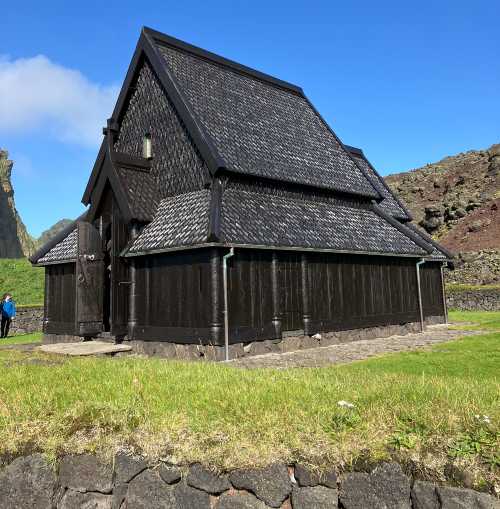
Heimaey Stave Church, locally known as Stafkirkjan
Stave Church in Vestmannaeyjar: A Nordic Jewel by the Sea
Adjacent to Skansinn stands the Vestmannaeyjar Stave Church, a striking wooden church that seems to belong to an older era. This is the Heimaey Stave Church, locally known as Stafkirkjan, a building that bridges centuries of Nordic history and celebrates Iceland’s Christian heritage.
Although it may look ancient, the stave church in Vestmannaeyjar was completed relatively recently, on 30 July 2000, as a gift from the Kingdom of Norway to Iceland. The occasion was deeply symbolic: the millennium anniversary of Iceland’s conversion to Christianity in the year 1000 AD, a pivotal moment in the island nation’s cultural and religious history.
The idea originated with the Icelandic government and Norway responded generously. The project was undertaken as a three-year research and reconstruction effort, led by the Norwegian Institute for Cultural Heritage Research. Its aim was to create an authentic and historically informed replica of a medieval stave church.
The church is a close replica of the Haltdalen Stave Church, originally built in Norway around the 1170s. While the surviving Haltdalen church is now situated at the Sverresborg Trøndelag Folkemuseum in Trondheim.
Inside the church, there is a replica of the St. Olav frontal, a celebrated medieval altar painting originally associated with Norwegian ecclesiastical art, further enriching the church’s cultural heritage.
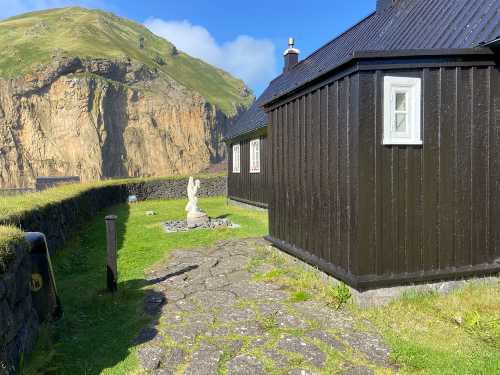
Landlyst
Landlyst: A House That Changed Icelandic Medical History
Also in Skansinn, Landlyst is far more than one of the town’s oldest houses. Built between 1847 and 1850 by master carpenter Matthias Markússon and his wife, Solveig Pálsdóttir, it is the second-oldest surviving house in the islands, surpassed in age only by Landakirkja church. Yet its true importance lies not just in its age, but in the remarkable role it played in saving lives.
Originally located at Strandvegur 43b, Landlyst remained there for more than a century. In 1992, the house was carefully dismantled, preserved and later reconstructed in its current location, where it reopened in 2000. Today, it stands as a testament to innovation, compassion and determination in the face of one of Iceland’s deadliest historical health crises.
From the 17th century onward, neonatal tetanus, then known as tetanus neonatorum was widespread in Iceland, but nowhere was it more devastating than in Vestmannaeyjar. By 1842, it was estimated that three out of every four children born alive in the islands died from the disease. The causes were poorly understood and explanations ranged from water shortages to dietary habits involving fish, seabirds or even fulmar feathers.
Hope arrived through the determination of Solveig Pálsdóttir, a priest’s daughter from Kirkjubær. In 1842, she undertook the arduous journey to Copenhagen to study midwifery and infant care. She became one of the very first Icelanders and the first Icelandic woman, to receive formal midwifery training abroad. Her education would soon prove life-saving.
Another pivotal figure arrived in 1847: Danish physician Peter Anton Schlesiner. Working closely with Solveig, Schlesiner helped establish a dedicated birthing infirmary known as Stiftelsið, built at the western end of Landlyst and funded by a Danish state grant. Together, they identified unhygienic practices, such as drying laundry on soil-exposed stone walls, as a major source of infection.
Drawing inspiration from medical practices used by Amazonian Indigenous peoples, Schlesiner introduced an oil-based balm, likely applied to newborns’ umbilical cords. The results were extraordinary; of twenty children born the following year, only one succumbed to neonatal tetanus. By the end of the 19th century, the disease had been virtually eradicated in Vestmannaeyjar.
Today, Landlyst reminds visitors that even the smallest buildings can hold stories that changed the course of history.
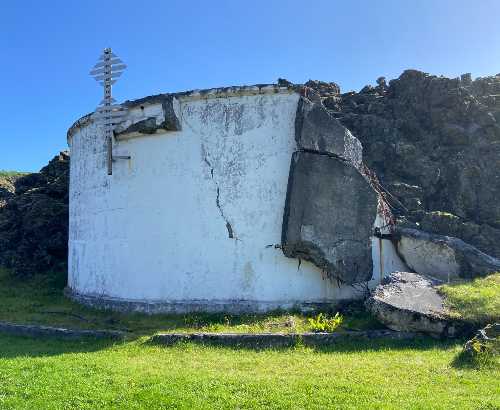
The water reservoir
The Water Reservoir and Wooden “Pípa” at Skansinn
At Skansinn, beside the historic fort area you can find lesser-known but important remnants of the island’s early infrastructure: a water reservoir, built in 1931 and a distinctive wooden pillar, or “pípa.” Together, they reflect the ingenuity required to sustain life in a windswept, water-scarce coastal environment.
The reservoir at Skansinn was built to collect and store seawater, supplying the swimming pool and local fish processing factories with purified seawater. Its elevated position helped keep the water cleaner and made distribution easier by gravity.
Fresh water had long been an issue on the island and rainwater was collected from roofs and in sail cloths until a water pipeline was laid from the mainland to the island in 1968.
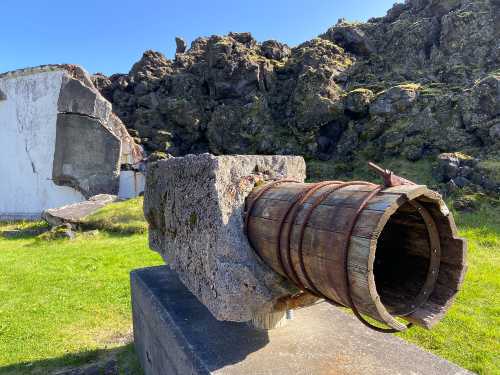
The wooden pípa
The Wooden “Pípa”
Standing near the reservoir is the wooden pípa, a wooden pipe or pillar that once played a key role in the water system. The pípa functioned as a measuring and overflow device, helping regulate water levels and manage distribution from the reservoir. Made from wood, an imported and valuable material in Iceland at the time, it demonstrates both craftsmanship and careful resource use.
Wooden water structures like this were common before the widespread use of metal piping and concrete. Their survival is rare, making the pípa at Skansinn a particularly valuable historical feature.
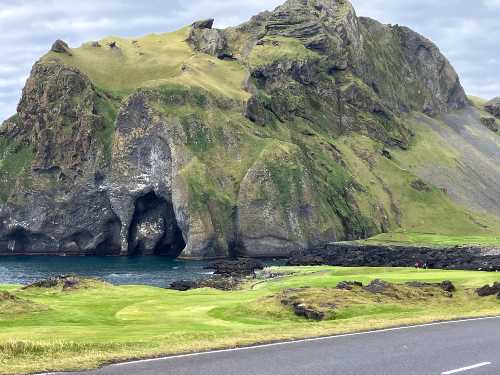
Elephant Rock
Elephant Rock
Elephant Rock is a fascinating natural rock formation located in Vestmannaeyjar.
This distinctive geological feature resembles the shape of an elephant, with a “trunk” dipping into the sea, which is how it got its name.
Local folklore tells of a giant elephant that stopped by the sea to rest and was turned to stone. While the legend is mythical, the result is very real; a remarkable formation that beautifully illustrates how Iceland’s volcanic landscape continues to shape its natural wonders.
The rock itself is made of volcanic basalt, formed by ancient volcanic activity that shaped the islands. Elephant Rock is a popular spot for visitors, known for its striking appearance and the dramatic coastal scenery around it.
We will be posting an article every day, covering this amazing trip and showcasing the Icelandic Seafood industry, cutting edge aquaculture, Icelandic heritage and the hospitality of the Icelandic people. You can read the whole publication here
Images: ©Fish Focus