FIRST HATCHERY PRODUCTION OF MUD CRABS


First hatchery production of mud crabs (Scylla serrata) in Kenya, by CrabsAlive
Justin Aniere, CEO of CrabsAlive has been involved in mud crab farming for over a decade, holding wild caught crabs in aquaculture facilities adjacent to his Che Shale Resort. After developing its own broodstock holding facilities and hatchery, his team had tried for some years to produce crablets from his hatchery without any significant success.
This November, with support from Scylla mud crab consultancy, the farm successfully produced its first batch of crablets from its hatchery; a first for both Kenya and Africa. This has been followed up with a second batch in December, with crablets settling just after Christmas.
Justin explained that “This exciting development is the first step in developing a new mud crab farming sector in Kenya for the benefit of our coastal communities. Whilst early days, we are optimistic that Kenya can now join the list of countries farming mud crabs for both domestic and overseas markets.” He continued, “The professional technical and professional support provided by Colin Shelley and his staff from Scylla mud crab consultancy has been critical to our success and we are looking forward to partnering with them moving forward as our operation expands.”
Dr Colin Shelley, of Scylla shared his thoughts on the success. “The first two batches of crablets produced from the pilot scale facility at CrabsAlive has demonstrated the potential for mud crab farming in Kenya”. He continued, “The local and international markets for mud crab are strong and fortunately Kenya is home to the largest, fasting growing mud crab species, Scylla serrata. Justin has been a real pioneer in mud crab culture in Africa, and it’s been rewarding to support him and his team reaching this important milestone.”
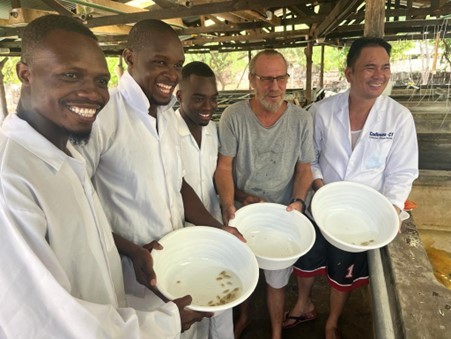 CrabsAlive’s success has justified support from local and international organisations in aquaculture development in Kenya, including FAO and the Kenyan Government program (KEMFSED), that is supported by the World Bank. The company has ambitious plans to expand its hatchery and nursery production facilities and work collaboratively with local community farmers to produce commercial quantities of mud crabs. It is hoping to be able to use some nearby ex-Government aquaculture facilities for pond production of mud crabs, producing the first commercial quantities of farmed crabs in the country.
In addition, it is intending to work with the local Bahari Hai Conservation Group, supporting local mud crab fishery conservation efforts. Mud crab aquaculture needs access to reliable quantities of mature crabs for broodstock; so a healthy mud crab fishery is important, even for the farming community, until at some time in the future, there is domestication of local stocks for farming.
Source Press Release
Main Image: One month old crablets