

Melting Antarctic ice sheet could lead to 0.5m sea level rise. The melting of the Antarctic Ice Sheet could contribute half a metre of sea-level rise in the coming century, […]
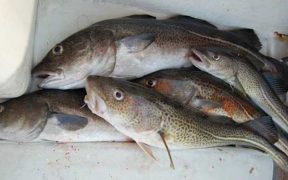
Cod and monkfish could disappear from British menus, due to climate change, warns study. Families may have to change their diets to protect threatened fish according to an article published […]
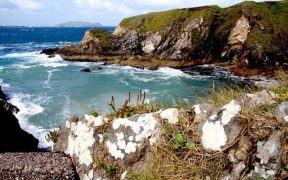
Oceans of Learning celebrates our sea with success. Over the past 10 weeks, the Marine Institute and partners have been celebrating our seas through our Oceans of Learning series, by […]
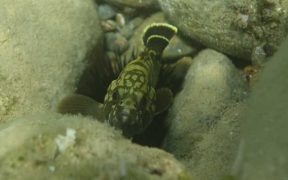
Rising water temperatures threaten fish reproduction. Scientists from the Alfred Wegener Institute, Helmholtz Centre for Polar and Marine Research (AWI) have published ground-breaking findings on the effects of climate change for fish […]

Climate change threatens fish species, 60% of fish species could be unable to survive in current areas by 2100 according to study and reported in an article by the Guardian […]

Rewilding the sea is the new way to capture carbon, says Eustice. Protecting large areas of ocean will play a key role in capturing carbon emissions from the atmosphere, George […]

Report underlines importance of MPAs. Earlier this month, the Joint Nature Conservation Committee (JNCC) of the UK released their report ‘Developing the evidence-base to support climate-smart decision-making on MPAs’ on […]

Ireland and Wales join forces to show case their coastal lives and the impact of climate change Coastal Communities are the focus this week on the Marine Institute’s Oceans of […]
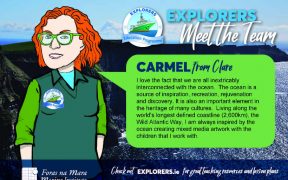
Campaign Connects us to the Ocean Through Art Activities – The Marine Institute’s Meet the Explorers Team primary school campaign connects us to the ocean through art activities The Meet the Explorers […]

NE Atlantic Plankton Decline Contributed by Climate Change – A shortage of summer nutrients as a result of our changing climate has contributed to a 50 per cent decline in […]
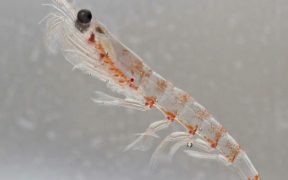
New study projects ocean warming impact on Antarctic krill. Ocean warming is likely to alter the distribution and lifecycle of ecologically and commercially important Antarctic krill over the rest of […]

New research on threatened ocean predators. A marine scientist at the Marine Biological Association of the UK (MBA) Laboratory in Plymouth, UK, has been awarded a prestigious European Research Council (ERC) Advanced […]

Climate Change Increases Fisheries Conflict Risk – A team of fisheries scientists and marine policy experts, led by a University of Rhode Island researcher, examined how climate change is affecting […]
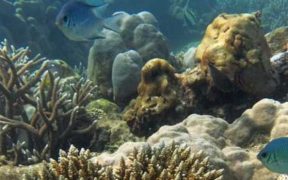
Climate change impacting upon understanding of MPAs. Climate change and warming seas are transforming tropical coral reefs and undoing decades of knowledge about how to protect these delicate and vital […]

Is cod becoming a stationary species in the Svalbard fjords? Climate warming is changing the distribution of marine species worldwide. In the Arctic, species from lower latitudes are expanding into […]

Rising CO2 levels will decrease fish diversity. Rising carbon dioxide in the atmosphere and the consequent changes created through ocean acidification will cause severe ecosystem effects, impacting reef-forming habitats and […]
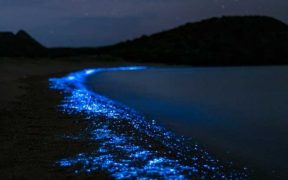
UK plankton population has undergone sweeping changes. The UK’s plankton population – microscopic algae and animals which support the entire marine food web – has undergone sweeping changes in the […]
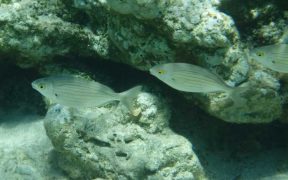
Climate change will affect fish sizes. Global climate change will affect fish sizes in unpredictable ways and, consequently, impact complex food webs in our oceans, a new Institute for Marine […]

UK marine scientist awarded grant for climate change research. A marine scientist at the Marine Biological Association of the UK (MBA) Laboratory in Plymouth, UK, has been awarded a prestigious European Research […]

Tropical nations worst hit by climate-related fish shifts. Policymakers will need to step up to the challenges caused by significant shifts in fish species distributions caused by climate change, according […]




Fish Focus is an online communications, marketing, news and information platform offering a wide range of services for the seafood sector covering all aspects of aquaculture, commercial fishing, seafood processing and the route to market. Follow us on social media platforms for Fish Focus, Aquaculture Focus and Seafood Focus.


