THE WESTMAN ISLANDS (VESTMANNAEYJAR)

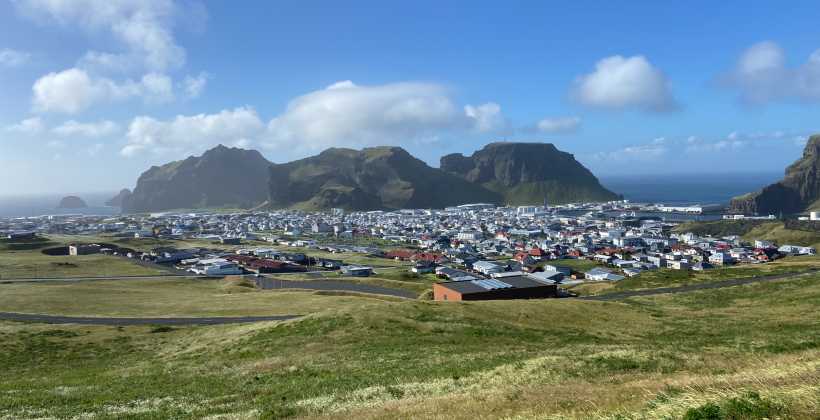
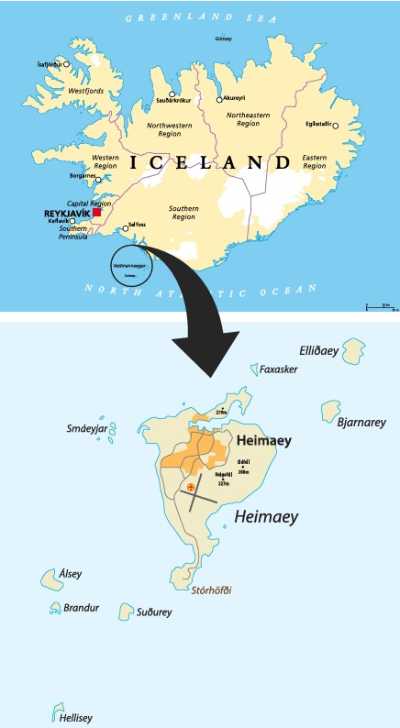
The Westman Islands (Vestmannaeyjar) Iceland’s best-kept secret. Fish Focus’ latest feature follows our trip to the Icelandic archipelago, Vestmannaeyjar.
Welcome to the Westman Islands (Vestmannaeyjar), where the smell of the sea is in the air, the land feels alive, the culture runs deep and adventure is never more than a few steps away.
The Westman Islands, or Vestmannaeyjar in Icelandic, derive their name from Irish slaves, referred to as “Westmen,” who were killed there by Norse settlers. According to legend, Hjörleifur Hróðmarsson, the blood brother of Iceland’s first settler, Ingólfur Arnarson, was murdered by slaves he had brought from Ireland. Ingólfur tracked these slaves to the islands and killed them in retribution, leading to the islands being named Vestmannaeyjar, meaning ‘the islands of the west men’.
Steep cliffs, huge seabird colonies (puffins!) and a compact, bustling harbour make the islands immediately recognisable. But their identity has always been more than scenery: the islands are a working maritime community whose economy and culture are anchored in seafood.
 A fishing community with deep roots
Fishing and fish processing have long been the bread-and-butter of the islands. Local co-ops and companies founded in the early and mid-20th century turned the harbour into a processing and export hub: companies such as VSV (Vinnslustöðin in Vestmannaeyjar) and Ísfélag Vestmannaeyja (Ísfélag) are examples of firms built around local landings and processing capacity, employing hundreds and anchoring supply chains for pelagic and demersal species.
These firms keep the islands connected to Iceland’s larger seafood export networks and preserve generations of skills in fishing, filleting and value-added processing. Beyond fresh and frozen fillets, the harbour supports ancillary activities that extract further value from landings such as fishmeal/oil production, by-product utilisation and specialised seafood processing. Those facilities mean that raw landings are often processed locally rather than shipped whole elsewhere, keeping more jobs and industrial activity on Heimaey. Modern investments in wastewater purification and more efficient oil/meal plants have also helped reduce environmental footprints while strengthening the islands’ processing toolbox.
Globally, demand for seafood continues to rise while wild catches are constrained by quotas and ecological limits. Iceland’s aquaculture sector has grown rapidly as a complement to wild fisheries: national production of farmed fish reached new highs in 2024, with tens of thousands of tonnes produced (the majority being Atlantic salmon).
Aquaculture holds significant appeal for Vestmannaeyjar, leveraging its maritime skilled workforce, sheltered harbour with direct sea access, existing processing and export infrastructure, and strong local political and investor support for year-round economic stability beyond seasonal fisheries and tourism. The most visible recent development is LAXEY, a company building a large land-based salmon farming operation on Heimaey.
Despite a small population of ~4,500 permanent inhabitants, Heimaey boasts an impressive array of restaurants serving exceptional seafood, even for the most discerning palates.
The Islands themselves are a geological wonder, a volcanic landscape still being shaped before your eyes. The most famous eruption occurred in 1973, when Eldfell Volcano unexpectedly exploded, forcing the evacuation of Heimaey. Lava flows engulfed part of the town, but in an extraordinary feat, locals pumped seawater onto the advancing lava, slowing it enough to save the harbour. Today, visitors can hike Eldfell’s vibrant, rust-red slopes, feeling the warmth that still radiates from the earth. From the summit, the view is otherworldly — a dramatic sweep of black lava fields, emerald hills and the sparkling Atlantic stretching to the horizon.
Nature thrives in this rugged outpost. The Westman Islands are home to the world’s largest Atlantic puffin colony, with millions of the endearing, orange beaked birds nesting on the cliffs each
summer. Birdwatchers and casual visitors alike are captivated by their comical flights and colourful charm.
Offshore, whale-watching tours reveal another side of the islands’ wild beauty. Orcas, humpbacks, and minke whales glide through the waters, while playful seals lounge on rocky outcrops. Even
from land, it’s not unusual to spot a spout or a breach on the horizon.
The islands are small but packed with natural spectacles of towering sea cliffs, hidden coves and hiking trails that seem to lead to the ends of the earth.
Heimaey is the heart of the Westman Islands, a town that exudes a quiet resilience. Walk its streets and you’ll find cozy cafés, inventive seafood restaurants, and the Eldheimar Museum, a moving tribute built around a house partially buried by the 1973 eruption.
Every August, the town bursts into life during Þjóðhátíð, a local festival featuring bonfires, live music and fireworks that light up the black volcanic night. It’s a celebration of survival, community, and pure Icelandic joy.
Though often overshadowed by Iceland’s more famous destinations, the Westman Islands offer something truly rare: an unfiltered, raw beauty where nature, history and culture meet. Here, you’ll
find fewer crowds, great stories of fact and folklore and landscapes that linger in your imagination long after you leave.
We will be posting an article every day, covering this amazing trip and showcasing the Icelandic Seafood industry, cutting edge aquaculture, Icelandic heritage and the hospitality of the Icelandic people. You can read the whole publication here
Image: ©FishFocus