DECLINE IN EXPORTS OF NORWEGIAN SALMON

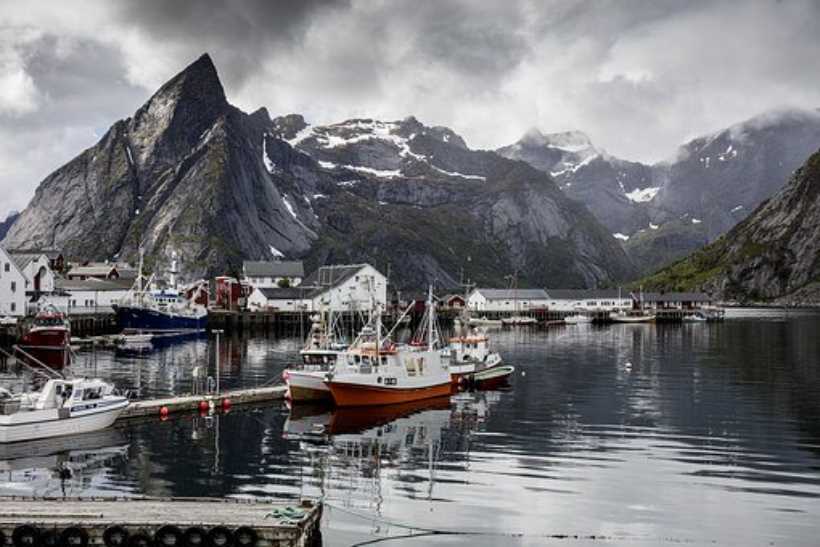
Decline in exports of Norwegian salmon. The Norwegian Seafood Council has given its latest update (at 8 April) on how covid-19 is affecting exports.
Their update says: “There is still considerable uncertainty around future demand and logistics globally. We are seeing tendencies towards a gradual normalization in Asian countries such as China and South Korea.
“Easter sales are underway, and we see growth in demand for packaged seafood products in retail. In some markets, fresh fish sales are declining due to the loss of the restaurant segment and restrictions in stores. People shop less often and buy products with a longer shelf life,” says Paul Aandahl, seafood analyst at the Norwegian Seafood Council.
If we compare with week 15 in 2019 which was the week before Easter last year, there has been a decrease of 15 percent in the export of fresh whole salmon.
“There is usually an increase in salmon exports the week before Easter. This year we see a decrease of 13 percent in round weight, compared to week 15 in 2019. Norway exported 17 024 tonnes of fresh whole salmon in week 14. This is a decrease of 15 percent compared to week 15 in 2019,” says Aandahl.
“With an average export price of NOK 64.27 in week 14, there was also a 6 per cent decrease in the price,” says Aandahl.
“Overall, exports of fresh whole salmon to the EU market increased by 1 percent to 14 235 tonnes in week 14. There was growth in Lithuania (18%), Germany (14%), Finland (146%) and UK (25%), while there was a decline to Poland (8%), Italy (32%), France (16%), Spain (9%),” Aandahl said.
“Exports of fresh salmon fillets increased by 2 percent in week 14 to 1 801 tonnes. For example, exports to the EU (7%), Japan (37%), Sweden (51%), Israel (154%) and South Korea (25%),” Says Aandahl.
“There was a decrease of about 7 percent in the export of fresh whole salmon to Asia in week 14. For the first time since the Corona outbreak, exports to China have surpassed the corresponding week in 2019. In week 14, exports of fresh whole salmon to China increased by 32 percent to 572 tonnes. There was also growth in South Korea (4%) and Taiwan (2%). There was a decrease in the export of fresh whole salmon to Thailand (75%) and Malaysia (69%). The reason for the decline in Thailand is largely due to reduced demand from the tourism industry, while the decline in Malaysia is largely related to the loss of air freight capacity,” Aandahl said.
There was a 72 percent decline in exports of fresh whole salmon to the United States in week 14. This is due to reduced demand from the restaurant market and a sharp reduction in transport capacity from week 12.
Norway exported 1 857 tonnes of fresh whole cod in week 14. This is an increase of 16 percent from the same week last year. Exports of frozen whole cod increased by 65 percent to 1 007 tonnes in week 14. For fresh whole Skrei, we see a decrease of 40 percent to 262 tonnes in week 14.
“Exports of fresh whole cod increased by 16 percent in week 14. The increase is due to better weather and bigger catches of cod. The largest growth was in the processing markets Netherlands and Poland, which produce frozen products for grocery to meet increasing demand,” says Ingrid Kristine Pettersen, seafood analyst at the Norwegian Seafood Council.
“Although the price is still slightly higher in Norwegian kroner, prices measured in Euro are considerably lower than week 14 last year. At the same time, we see continued decline in exports of fresh Skrei as a result of the loss of the restaurant segment and limited selection of fresh fish around Europe,” says Pettersen
“Growth for frozen whole cod also continues in week 14, and we see a strong increase of 128 percent to the UK. This is due to increased demand for frozen fish in grocery in the UK, while demand for the processing industry increases accordingly. For frozen cod, prices are increasing, also measured in other currencies such as the US Dollar and the British Pound,” Pettersen says.
“We see a continued growth of 32 percent in clipfish exports to Portugal in week 14. The price measured in NOK increases, while the price measured in Euro falls. For cod clipfish, we have seen a positive development overall so far this year, but weak demand growth in some key markets creates uncertainty going forward. For saltfish, we see a 19 percent decrease in exports, while the price increases both in NOK and in Euro,” says Pettersen.