ONE IN TWO TINS OF TUNA LABELLED SUSTAINABLE

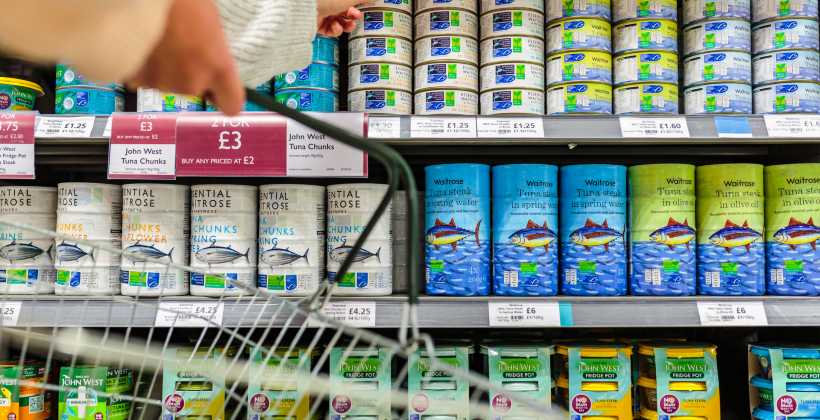
One in two tins of tuna labelled sustainable, overtaking cod as UK’s top-selling MSC certified fish. One in two cans of tuna on UK supermarket shelves are now labelled as certified sustainable in a major turnaround for one of the UK’s favourite cupboard staples, according to a new report.
Five years ago, fewer than one in five tuna products carried the Marine Stewardship Council (MSC) blue ecolabel, the world’s most recognised ecolabel for sustainably caught seafood, and retailers were being urged to do more to support consumer demand for sustainable sourcing.
Now, thanks to retail commitments and the progress made in global tuna fisheries, nearly half (49%) of all tuna products available in UK supermarkets are MSC certified up from just 18% in 2021, according to the MSC UK Tuna Shopper Report 2026, which is published today.
And for the first time, tuna has overtaken cod to become the UK’s top-selling MSC certified wild-caught seafood species, the report, published ahead of World Tuna Day on 2 May, also shows.
Younger shoppers are driving demand for sustainable seafood, with 83% of under 30s saying they actively choose sustainable fish, according to research from the MSC. Tuna’s affordability, convenience and versatility, combined with the trend for Gen Z favourites such as sushi, have further boosted its appeal.
Seth McCurry, MSC UK & Ireland Senior Commercial Manager, said:
“In just five years, we’ve gone from sustainable tuna being hard to find to it becoming the norm for millions of UK shoppers.
“This progress reflects the commitments of UK retailers and brands to source responsibly, from sustainable fisheries, and in doing this, they are rewarding the efforts made by fisheries around the world to meet the rigorous, science-based standard set by the MSC.
“There is more to do, but the UK is proving that sustainability can be delivered at scale, without compromising on affordability or choice. It’s a powerful example of how market demand can drive real, lasting improvements for our oceans.”
In terms of product volumes, the shift is even bigger: almost two-thirds (65%) of all tuna sold in UK supermarkets is now MSC labelled, up from just 25% two years ago.
That turnaround has translated to records sales. In 2024/25, UK and Irish consumers purchased 45,840 tonnes of MSC labelled tuna, the highest level to date, and the UK and Ireland accounted for 18% of global MSC certified tuna sales in the same period, up from 8% in 2023/24.
Ten major supermarkets now offer MSC labelled tuna, compared with six in 2023 and just three in 2021. After setting targets to reach 100% MSC labelled tuna across their own‑brand ranges, Waitrose, Sainsbury’s and Tesco have all achieved this milestone. Iceland has also now reached 100% MSC labelled tuna across its own brand tuna products, while both Lidl and Aldi have increased their certified tuna range substantially over the past two years.
Princes announced it reached its commitment to sourcing 100% MSC certified for its own brand in February, while John West and Rio Mare also expanded the number of MSC labelled products they offer.
To meet the MSC Standard, a globally recognised science-based benchmark for sustainable fishing, fisheries must show that stocks are healthy and not overfished, impacts on habitats and other wildlife are minimised, and the fishery is well managed and effectively monitored.
In recent years, tuna fisheries worldwide have made significant improvements to meet these requirements, including adopting new technology to reduce bycatch and putting science-based harvest strategies in place – pre-agreed plans that set out how much tuna can be caught as tuna populations rise and fall. With two-thirds of the global tuna catch now certified to the MSC Standard, the everyday tuna choices found in UK shops are increasingly coming from some of the best managed and most environmentally sustainable fisheries in the world.
Image: MSC