RARE VICTORY FOR THE OCEAN, THREATENED BY FRANCE AND SPAIN


Rare victory for the ocean, threatened by France and Spain. Victories are rare for the ocean. On 5 February this year, one was secured though, wrestled out from the jaws of the EU’s harmful lobbying. On that day, the Indian Ocean Tuna Commission adopted, for the first time, a 72-day annual ban on the highly-sophisticated objects that are deployed on a large scale in the Indian Ocean by French and Spanish industrial fishing fleets to aggregate and catch tropical tuna, down to the last fish. These floating and drifting rafts, known as ‘FADs’ for ‘fish aggregating devices’, are responsible for the capture of huge numbers of juvenile yellowfin and bigeye tuna – two species considered overfished – as well as many fragile species of marine animals such as turtles and sharks. This measure exists elsewhere in the world, specifically for conserving fish stocks. But the European Union is now threatening this absolutely crucial first step for the regeneration of the Indian Ocean’s health, which undergoes relentless pressure from industrial fishers, primarily French and Spanish, targeting tuna in these waters.
It is therefore for the sake of the only two European tuna fishing nations – France and Spain – that the European Commission will decide in a few days’ time whether or not it will object to the annual prohibition on drifting FADs, despite the fact that banning these technological rafts is an indispensable measure to protect overexploited tuna populations and marine ecosystems impacted by non-selective and unsustainable industrial fishing.
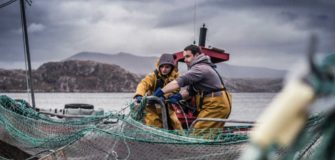
Tuna fishing is carried out off the coast of West Africa and in the Indian Ocean by about 50 French and Spanish vessels averaging over 80 meters in length.
An EU objection would be a denial of democracy
According to the rules of the Indian Ocean Tuna Commission, the State objecting to a measure does not have to apply it to its own fleets. In other words, if the EU objects to the IOTC prohibition, the ban on FADs will become useless as these fatal rafts for biodiversity are mainly used by European vessels. The fact that the European Commission is considering using the objection procedure shows its contempt for democratic processes in fisheries management. It is worth recalling that the FAD ban was adopted on Sunday 5 February by 16 of the 23 countries present at the IOTC meeting in Mombasa, Kenya.
“The European Commission’s objection procedure must be approved by the Council of EU Member States. If this is the choice made, it would mean that the EU is assuming a very brutal neo-colonial and anti-democratic position towards the Global South,” explains Frédéric Le Manach, Scientific Director of BLOOM. ‘In addition to being in total contradiction with the EU’s environmental objectives, such a decision would deeply damage North-South relations. We find it hard to believe that the EU would so openly stand by its toxic links with the environmentally destructive fishing industry.‘
120 dangerous days
The European Union has 120 days to object the resolution adopted by the Indian Ocean Tuna Commission. After a statement to this effect by Mr Marco Valletta, head of the European delegation, during his last speech on 5 February in Mombasa, the possibility of an objection was reaffirmed by the European Commission through Mr Emmanuel Berck(1) in response to a question asked on 6 February 2023 by MEP Caroline Roose.(2) The same MEP co-signed a letter of inquiry(3) with four other Greens/EFA MEPs (Rosa d’Amato, Francisco Guerreiro, Grace O’Sullivan, and Marie Toussaint), but this letter has not yet received a response.
The EU must support a permanent ban on all drifting FADs
In a letter sent on Monday 20 February to the Commissioner for Environment, Oceans and Fisheries, Virginijus Sinkevičius, BLOOM formally asks the Commission to not only drop its objection, but to also support the only measure that makes sense in the long term: a total and permanent ban on drifting FADs. This was also the request made by many stakeholders such as India, which had tabled such a proposal in the framework of the IOTC negotiations at the beginning of February,(4) as well as the artisanal fishers of the Reunion Island and the Seychelles, who are strongly advocating for it.(5)
Reminding the EU of its duty and exploring links with lobbies
One of the fundamental objectives of the ‘Common Fisheries Policy’ (CFP) is that fishing activities contribute to ‘long-term environmental sustainability’. It is worth reminding European institutions that CFP objectives apply to European fleets wherever they operate in the world. By defending only the interests of industrialists whose practices are destructive to the environment, the Commission seems to be losing sight of its mission to defend the general interest.
In order to clarify the frequency and nature of the links between the institutions and lobbies, BLOOM has just made a request for the communication of all exchanges, at all levels of function, that may have taken place between individuals in the European Commission involved in IOTC and fishing agreements’ negotiations, and the management of tropical tuna fisheries in general, with the Orthongel, Cepesca, Opagac, Anabac, Europêche, and UAPF lobbies, as well as with all members of these structures (e.g. CFTO, Sapmer, Albacora, Echebastar, etc.).(6)
Citizens have the right to understand what is driving the detrimental positions of their institutions when they jeopardise the future of the ocean, marine life and the climate.