UNITING THE SEAFOOD SECTOR

Uniting the Seafood Sector
How the UK Seafood Federation Is Shaping the Future of Seafood.
The UK Seafood Federation (UKSF) is the unified voice of the UK’s seafood processing and trading sector, bringing together businesses from across the supply chain with a shared ambition: to make seafood a bigger part of the British diet for the benefit of both public health and the planet.
At a time when the role of food systems in sustainability, nutrition and economic resilience is under increasing scrutiny, UKSF positions the seafood industry as a vital contributor to a healthier, more sustainable future.
By working in a pre-competitive space, the Federation enables collaboration on the issues that matter most to the sector, from sustainability and skills to trade and reputation, while still allowing businesses to compete and innovate in the marketplace.
The organisation’s mission is clear: to be the voice of the UK seafood industry, organising the sector’s collective energy and expertise around the priorities that will have the greatest impact.
Led by industry experts, UKSF seeks to align processors, traders and stakeholders behind common goals, creating a platform where knowledge is shared, progress is celebrated and challenges are tackled collectively.
UKSF’s approach is both strategic and pragmatic. By combining expertise with clear objectives, the Federation aims to create practical pathways for growth while remaining flexible and responsive to a rapidly changing operating environment.
Central to this is a commitment to telling the industry’s story more effectively, highlighting achievements, learning from experience and continuously adapting as the sector evolves.
The Federation’s strategic focus spans several core themes: addressing shared industry challenges, strengthening skills and talent, embedding ethics and sustainability, safeguarding industry integrity and reputation, ensuring smooth trade flows, and improving communication and engagement across the value chain.
An industry of significant scale
The UK seafood processing sector is a major contributor to the national economy, with an estimated turnover of around £5.3 billion. It supports approximately 16,000 full-time jobs alongside 2,500 part-time and seasonal roles, underpinning livelihoods in coastal communities and beyond. This scale highlights both the importance of the sector and the need for strong, coordinated leadership — a role UKSF is designed to fulfil.
Recognising the complexity of the landscape, UKSF has identified five strategic priority areas that define both the challenges facing the industry and the actions required to overcome them.
Skills & talent
The seafood sector continues to face a perception challenge that limits its ability to attract and retain skilled workers and future leaders. Working with the University of Lincoln Agri-Tech team, UKSF is advocating for a cohesive talent pipeline — from schools through to higher education — while increasing local engagement in core fishing, farming and processing regions. By raising awareness of career opportunities and strengthening the industry’s profile, the Federation aims to secure the workforce needed for future growth.
Ethics & sustainability
Consumer concerns around environmental impact, stock health and social responsibility remain a barrier to category growth. UKSF is working to build a unified, evidence-based case for seafood, collaborating with bodies such as Seafish Industry Authority and the Seafood Carbon Emissions Profiling Tool and promoting credible standards including the Marine Stewardship Council. Through expert-led sub-committees, the Federation intends to prioritise the most pressing issues and drive measurable progress.
Industry integrity & reputation
Historic practices and negative media narratives have shaped public perception of the sector. UKSF believes the industry must take ownership of its story — developing stronger communications, aligning messaging with partners and proactively highlighting the positive economic, social and environmental contributions seafood delivers.
Smooth & efficient trade flows
Given the UK’s reliance on both imports and exports, friction in trade can have immediate consequences for businesses and jobs. UKSF is working to ensure policymakers fully understand the sector’s structure while strengthening relationships with domestic and international stakeholders, including organisations such as Seafood Europe. A dedicated trade task force will help the industry respond rapidly to emerging issues.
Communication & engagement
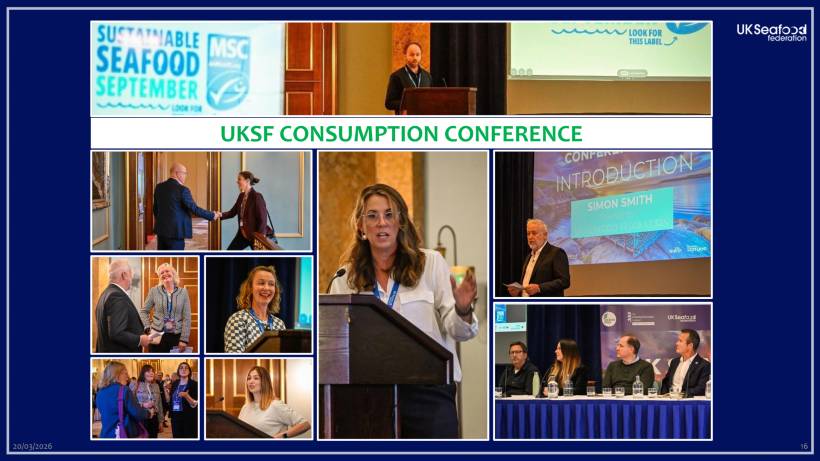
Effective advocacy requires consistent, coordinated engagement. UKSF aims to be the recognised representative voice of the sector — ensuring the industry is consulted on key decisions and speaks with clarity and confidence. By identifying priority audiences and learning from best-practice communicators, the Federation seeks to elevate how the industry connects with stakeholders. This was apparent in October 2025 when the Federation held its first Seafood Consumption conference at Fishmongers’ Hall. Follow up workshops are planned for 2027.
Ultimately, UKSF is built on the principle that collective action drives meaningful change. By inviting processors, traders and stakeholders to participate, the Federation is creating a collaborative platform to shape the future of the UK seafood industry — one that is resilient, innovative and aligned with the expectations of consumers, policymakers and communities alike.
As the organisation continues to evolve, its success will be measured not only by industry growth but by its ability to strengthen trust, unlock talent and demonstrate the vital role seafood can play in a sustainable food system.
Momentum and leadership at the UK Seafood Federation
Since its inception, the UK Seafood Federation (UKSF) has rapidly built momentum, strengthening its role as a driving force for progress across the seafood processing and trading sector. Through a clear set of objectives and a collaborative approach, the Federation continues to tackle industry challenges while creating new opportunities for growth, innovation and long-term sustainability.
At the heart of this progress is a leadership team combining deep sector knowledge with a shared commitment to the industry’s future. The management team of 8 — including Chief Executive Simon Dwyer and General Manager Julie Waites — works alongside a committee chaired by Simon Smith of Sofina Foods Europe and Young’s Seafood Limited. Together, they are supported by a broad network of experienced professionals whose collective expertise ensures the Federation remains focused on building an effective, profitable and sustainable industry for generations to come.
UKSF’s board reflects the diversity and scale of the UK seafood landscape, bringing together senior leaders from major processors, traders and institutions such as, The Fishmongers’ Company. This breadth ensures the Federation’s direction is informed by practical insight from across the industry. (members are on our website)
Supporting the board is a structure of specialist sub-groups focusing on key priorities. These include Skills & Leadership Development, Policy & Trade, Sustainability, Technical & Innovation and Consumption — each designed to channel expertise into tangible outcomes for members.
Delivering impact through skills, research and innovation
Recent activity highlighted in the Federation’s newsletter demonstrates the tangible value these groups are delivering. The Research, Innovation and Skills sub-group in particular has made significant progress in addressing two of the sector’s most pressing needs: developing future talent and improving operational efficiency.
Through a leadership development programme delivered in collaboration with the University of Lincoln, more than 120 future leaders from across the UK, from Chessington to Peterhead, have already taken part. The initiative, led by industry professionals, is helping to build a pipeline of skilled managers equipped to guide the sector through a period of rapid change.
Alongside this, research teams are working directly with member companies to identify practical efficiencies in seafood processing, generating measurable cost savings and supporting competitiveness in a challenging operating environment. The work underscores a central principle of UKSF’s strategy: that people and productivity are inseparable drivers of success.
Collaboration remains a defining feature of the Federation’s approach. In October, UKSF convened industry leaders at an event hosted at Fishmongers’ Hall, where discussions centred on how the sector can collectively increase seafood consumption in the UK. The conference provided a platform for sharing insights, aligning priorities and exploring practical actions to unlock category growth.
As UKSF continues to expand its reach and influence, its focus remains firmly on strengthening the foundations of the industry — from leadership and skills to innovation and market development. By harnessing collaboration and expertise across the supply chain, the Federation is not only addressing today’s challenges but also shaping a more resilient and competitive future for UK seafood.
Through strong governance, targeted initiatives and a growing network of engaged members, UKSF is demonstrating how coordinated industry action can translate ambition into measurable progress — ensuring the sector is well positioned to thrive in the years ahead.
Main Image © UKSF