OCEAN PERFECT ROLLING OUT NEW METHOD FOR SHIPPING LIVE SHELLFISH

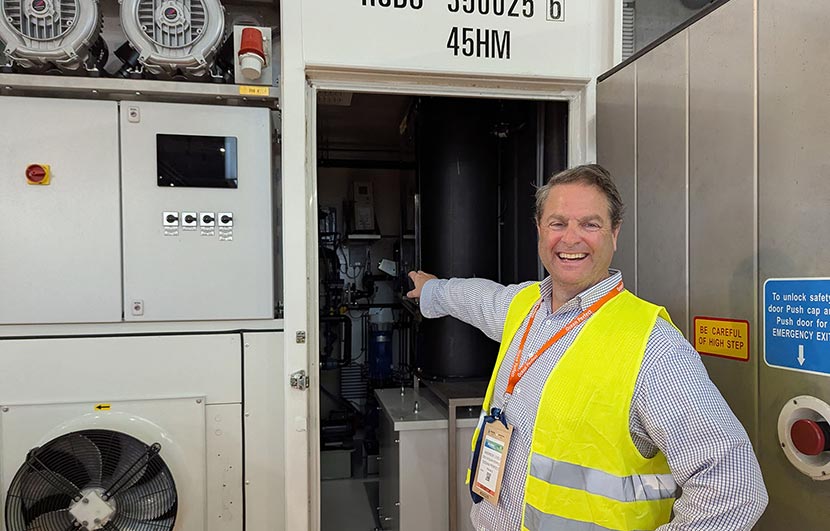
Ocean Perfect CEO Andrew Lively shows off the tech behind the company’s new live shellfish shipping system | Photo by Chris Chase/SeafoodSource
Ocean Perfect CEO Andrew Lively said it has dialed in its method of shipping live shellfish inside a 40-foot shipping container, and has partnered with European logistics firm
Delanchy / Kotra, a major player in transport and logistics of fresh produce, to show off the new technology during Seafood Expo Global.
Ocean Perfect has designed a 40ft shipping container which hosts a system that will keep a range of different shellfish – including oysters, king crab, snow crab, lobsters, and more –
alive for up to 21 days with no loss of weight at a 1 percent mortality rate. Lively told SeafoodSource that the new system is also connected via a satellite network to an application called JUMO, allowing whoever is using the container to remotely monitor every aspect of the container, including CO2 levels, temperature, whether the system is running
or not, and more from a phone or laptop.
“You will get an alarm if there’s any challenge with the system,” Lively said. “It’s a two-way system, so you’ll be able to adjust anything that you want, so if somebody turns it off you
can turn it back on.”
Lively said the company has done a number of trials with the system, demonstrating it is able to hold European lobsters for 21 days with less than one percent mortality. Ocean
Perfect has already been operating with king crab, and recently completed a test for snow crab with a mortality rate of 3 percent. Another key factor for Ocean Perfect’s system is it
can ship a number of different species at the same time – so a container could have oysters, lobsters, and king crab in separate modules all inside one shipping container.
Lively said a company could, for example, take out a few modules of lobster to serve an event fresh product one day, and leave some of the lobsters inside the system to be kept
fresh for a different event the next week.
The goal of the Ocean Perfect container is to reduce the cost of shipping live seafood while simultaneously improving the quality of the product when it gets to its destination. Because the system has been designed to mimic the optimum environment for the shellfish it contains, it arrives at full weight and in peak condition – and great flavor.
“All of it adds up to a reduced shipping cost,” Lively said.
The shipping process also uses no packaging, less labor, and gives more flexibility on shipping dates compared to current methods.
“If there’s a flight cancellation, you’re limited in what you can do if your lobster is sitting in a container waiting for a plane,” Lively said. “Delays happen, as we’ve all experienced. If I
were a lobster, I would have been dead long ago with some of the delays I’ve had.”
The shipping container is also ISO-certified, and can move from a boat to a train or a truck and back seamlessly to be shipped to any destination. The partnership with Delanchy
highlights that ability to be transported, and the container system that Ocean Perfect is showing off at Seafood Expo Global was brought to the floor by Delanchy from start to
finish.
“They have Europe covered from a logistics point of view,” Lively said. “They’re a long- standing company in the industry, and have the customer base to be able to get products
direct to market here in Europe.”
Lively said Ocean Perfect is also working with logistics companies in North America to reach destinations across the U.S. Using normal existing routes, customers can ship live
lobsters from Newfoundland to Europe in 8 or 9 days, or from Nova Scotia to Las Vegas in 5 days, he said.
The company currently has 4 systems built and has 25 on the production line, which can be
leased by companies to ship product.
Getting to the point it is at now hasn’t been easy. Lively said supply chain issues delayed the container for several months, causing “a few little hiccups” on the company’s path to
building its first container systems. The mechanisms that allow it to control things like CO2 level and water quality contain a number of parts, some of which were challenging to
source.
“Getting some of the smaller components for pumps, getting some of the attachments for those, have been held up,” Lively said. “That value chain stuff has been cleared up, and
that’s what’s plagued us.”
Lively said the silver lining of all the delays is that its given Ocean Perfect more time to develop its Jumo technology and connectivity, enabling the company to do technical
upgrades to improve the connectivity. The delays also allowed it to trial more animals to perfect the environment of the container.
“We’ve been doing a lot of studies along the way,” Lively said.
Looking forward, the company is looking into future opportunities with other species, including shrimp, to expand its reach.
“The key message is, this is going to improve profitability for seafood sellers, fishermen, and seafood buyers by making it less expensive to move the product and getting a better
product at the end of the line,” Lively said. “Not everybody can go to Stonington, Maine and have a fresh caught lobster. This gives you the Stonington experience in Rome.”