BIOLOGICAL MODELLING TURNS TIME–TEMPERATURE DATA INTO INSTANT FOOD SAFETY SIGNALS

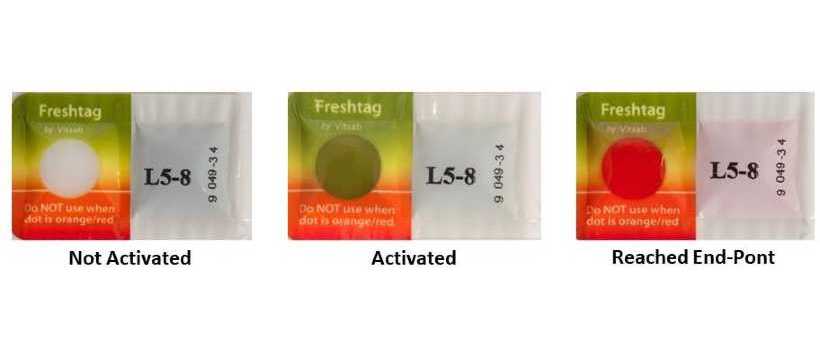
Biological modelling turns time–temperature data into instant food safety signals.
By; Jeff Desrosiers, President at Vitsab®
Modern food distribution systems depend on a delicate balance of time and temperature. From seafood shipments and ready-to-eat meals to airline catering and home delivery boxes, perishable products travel through a series of environments where temperatures fluctuate constantly. At any given time, a pallet may move from refrigerated storage to a loading dock, onto an aircraft, into a truck, and finally onto a consumer’s doorstep, while each step introduces variables that influence microbial growth and product quality.
Historically, monitoring these conditions relied on thermometers, data loggers, and manual temperature checks. While these tools provide valuable data, they often create an interpretation challenge at the moment a decision must be made about the safety of the product. A temperature graph may show a complex series of spikes and recoveries, leaving operators or consumers uncertain about whether the product remains safe to consume.
Time-temperature indicators offer a different approach. Rather than capturing isolated measurements, these systems track how temperature and time interact cumulatively across the product’s journey. When designed for ease of use, they translate biological risk into a visual signal that can be understood instantly. But the simplicity of the visual signal masks an intricate scientific foundation; behind every colour change lies a carefully engineered biological process designed to mirror the real conditions that influence spoilage and microbial growth.
The Biological Engine Behind a Colour-Changing Indicator
At the heart of advanced time-temperature indicators is a biochemical reaction embedded within the label. The indicator contains two separate components housed in small compartments. One contains an enzyme, a naturally occurring biological catalyst that drives chemical reactions. The other contains a substrate, a compound that reacts with the enzyme once the system is activated. When the label is activated, the enzyme and substrate begin interacting through a controlled reaction. As this interaction progresses, it gradually alters the pH environment within the indicator. That subtle chemical shift is what eventually produces the visible colour change.
The reaction behaves much like a highly calibrated pH test strip. Under warmer conditions, the reaction proceeds faster. Under colder conditions, it slows dramatically. Because the reaction cannot reverse once it has occurred, every temperature exposure leaves a permanent record in the indicator. This mechanism allows the label to accumulate the effects of temperature fluctuations throughout the product’s journey. A brief warm exposure might advance the reaction slightly, while prolonged warmth accelerates it significantly. If the product returns to refrigeration, the reaction slows but never reverses, preserving a cumulative history of handling conditions. The result is a biological system that evolves in response to the same environmental conditions that affect real food products.
One of the greatest challenges in cold chain monitoring is variability. Temperature abuse rarely occurs as a single catastrophic failure. More often, it appears as a series of brief fluctuations throughout transportation and storage. A shipment might remain properly chilled during air transport, warm briefly during unloading on a tarmac, cool again inside refrigerated storage, and experience intermittent exposure during delivery. Traditional threshold-based indicators often struggle with this complexity. Some systems respond to a single temperature spike, even if the exposure was brief and biologically insignificant.
Biological time-temperature indicators address this challenge by accumulating exposure gradually rather than reacting to a single event. Because the enzyme-driven reaction progresses continuously, the label effectively mirrors the cumulative thermal history of the product, and by following the true dynamics of microbial growth, these indicators provide a far more meaningful representation of product condition than isolated temperature readings.
Calibrating Indicators to Real Microbial Risk
Designing a reliable time-temperature indicator requires more than simply creating a reaction that changes colour over time. The reaction must be calibrated to reflect the actual biological risks associated with a specific product. Different foods spoil in different ways and at different speeds. A seafood shipment, for example, may present different microbial concerns than leafy greens or prepared meals. Each product category has distinct organisms of concern, critical temperature thresholds, and shelf life expectations.
Developing an indicator formulation therefore begins with data. Researchers collect microbial growth information at multiple controlled temperatures, often using incubators or water baths to simulate real storage conditions. These experiments help establish how quickly spoilage organisms grow under various temperature scenarios. Once these data points are established, scientists can begin adjusting the indicator formulation. Different enzymes, substrates, and concentrations can be combined to fine tune the speed and behaviour of the reaction. Through repeated testing, researchers align the reaction curve with the biological curve of microbial growth.
Transit conditions also influence calibration. A product shipped across oceans will experience a very different temperature profile than a meal delivered locally within a few hours. Packaging methods—such as gel packs, dry ice, or mechanical refrigeration—must also be considered when designing the indicator. Because food safety is inherently conservative, additional safety margins are typically incorporated into the model. By building these buffers into the formulation, the indicator ensures that warnings occur before microbial risk becomes unacceptable. Through this process, a simple label becomes a highly tailored monitoring tool designed around the biology of the product it protects.
From Scientific Modelling to Real World Cold Chain Visibility
Developing reliable monitoring tools requires collaboration across multiple scientific and regulatory communities. Food safety regulators establish protective guidelines but often depend on academic research and industry data to refine those standards. Universities and research laboratories conduct microbial studies that reveal how pathogens behave under different environmental conditions. Bridging these domains requires organisations capable of translating complex scientific findings into practical tools for the food industry. Those dedicated to food safety should be focused on research and development in this area and should work closely with regulators, academic researchers, and industry partners to refine monitoring technologies.
Vitsab is one example of an R&D company operating at this intersection. Working with scientists, regulators, and industry stakeholders, the organisation has focused on developing cumulative visual monitoring technologies designed to align with real biological risk. Its Freshtag® indicators apply enzyme-based reactions and calibrated formulations to translate complex temperature exposure histories into a clear stoplight signal that operators, quality managers, and consumers can interpret instantly.
This collaborative model allows new formulations to evolve alongside advances in microbial science. As researchers better understand pathogen behaviour and shelf life dynamics, those insights can be incorporated into future indicator designs. The result is a monitoring approach that improves both safety and sustainability. By accurately distinguishing between safe and compromised products, cumulative indicators help prevent unnecessary disposal while still identifying situations where intervention is required.
As global food systems continue to expand and delivery models become more decentralised, the demand for clear, trustworthy cold chain signals will only grow. Technologies that combine rigorous scientific modelling with intuitive visual communication may play an increasingly important role in ensuring that perishable foods remain both safe and responsibly managed throughout their journey.
Image: Vitsab®