NORWEGIAN RESEARCH PROJECT ON FISHERIES CARBON EMISSIONS

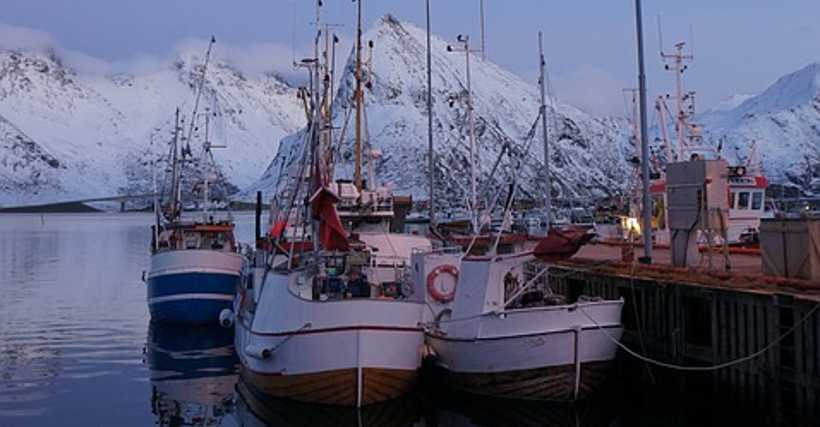
Norwegian research project on fisheries carbon emissions. Norwegian seafood and fisheries body, FHF, is launching a research project to map and systematise existing and obtain new knowledge that contributes to reducing CO2 emissions from the fishing fleet.
The headline for the discussion of the project from FHF is: “How will the fishing fleet meet the future climate requirements?”
In the discussion, FHF points out that it is the agreement between Norway and the EU that obliges Norway to cut greenhouse gases in the fishing fleet by 40% from 2005 to 2030. Results from the project “Update of climate roadmap for the fishing fleet” show that CO2 emissions from the fishing fleet were reduced from the turn of the millennium, while since 2014 they have risen again after being fairly stable for a period from 2007-2014. According to Statistics Norway, CO2 emissions from the fishing fleet were 878,000 tonnes in 2020.
This accounts for just under two per cent of Norwegian greenhouse gas emissions. The increase in CO2 emissions from the fishing fleet may be due to several factors. A trend in newbuilding in both the coastal and deep-sea fishing fleet is that new vessels will be larger than the vessel to be replaced and therefore greater engine power will be installed.
This is probably the main reason why emissions have increased and it is likely that emissions will continue to increase in the short term if no action is taken while waiting for the development of mature technology for the utilisation of fossil-free energy carriers.
The different vessel groups have different issues due to the length of time at sea. According to a new report in the FHF project ‘Electrification of the coastal fishing fleet using batteries and fuel cells’ prepared by Sintef Ocean, the coastal fishing fleet will be able to achieve hybrid operation with battery / hydrogen within a few years.
The study showed that hydrogen or ammonia-based propulsion systems are technologically well suited, and provide the necessary capacity for emission-free operation far beyond the requirement of 12 hours of sea weather for a coastal fishing vessel with a length of 13 m.
For longer sea weather (47 hours), the use of hydrogen-based fuel cells is only half of the required capacity, which is due to limitations in the placement of the tanks on board.
In practice, this can be solved with the help of more detailed safety analyses, but without these analyses the tanks must be placed on deck, open and with plenty of space around them – which helps to reduce the amount of hydrogen you can carry with you.
By using ammonia with a higher volumetric energy density, on the other hand, it will be possible to cover almost the entire energy requirement. The use of hydrogen or ammonia as fuel can contribute to up to 95% reduction in CO2 emissions.
So far, calculations show that switching to this technology will result in significant additional costs. It is assumed that series production of fuel cell technology and associated infrastructure will result in cost reductions that make an ammonia-based solution cost-effective compared to a conventional coastal fishing vessel.
In the deep-sea fishing fleet, it is not possible to achieve zero emissions in the short term, but there is a need to document the effect of energy-saving technologies.
In the updated climate roadmap, the main conclusion is that a shift from a CO2 tax with a compensation scheme to a requirement to mix biofuels with a permanent compensation scheme will be an accurate climate measure.
This will both have a direct climate effect and give the industry a long-term price signal to prioritise energy efficiency. It will also lower the threshold for when zero-emission technology becomes profitable.
With a mixing requirement corresponding to a CO2 tax of NOK 2,000 per tonne of CO2, the fishing fleet will reduce its CO2 emissions by at least 38 percent in 2030, according to the calculations in the project. As a result of the results of this project, the authorities have now decided to change the compensation scheme to not apply to bunkering abroad.
In order to meet the climate requirements, it is important to further map out which measures will have the greatest potential for the sea-going fleet.
Therefore, FHF has now announced up to NOK 5 million for the preparation of a knowledge base for reducing CO2 emissions from the fishing fleet in the short (2030) and long (2050) term.